2026-04-02
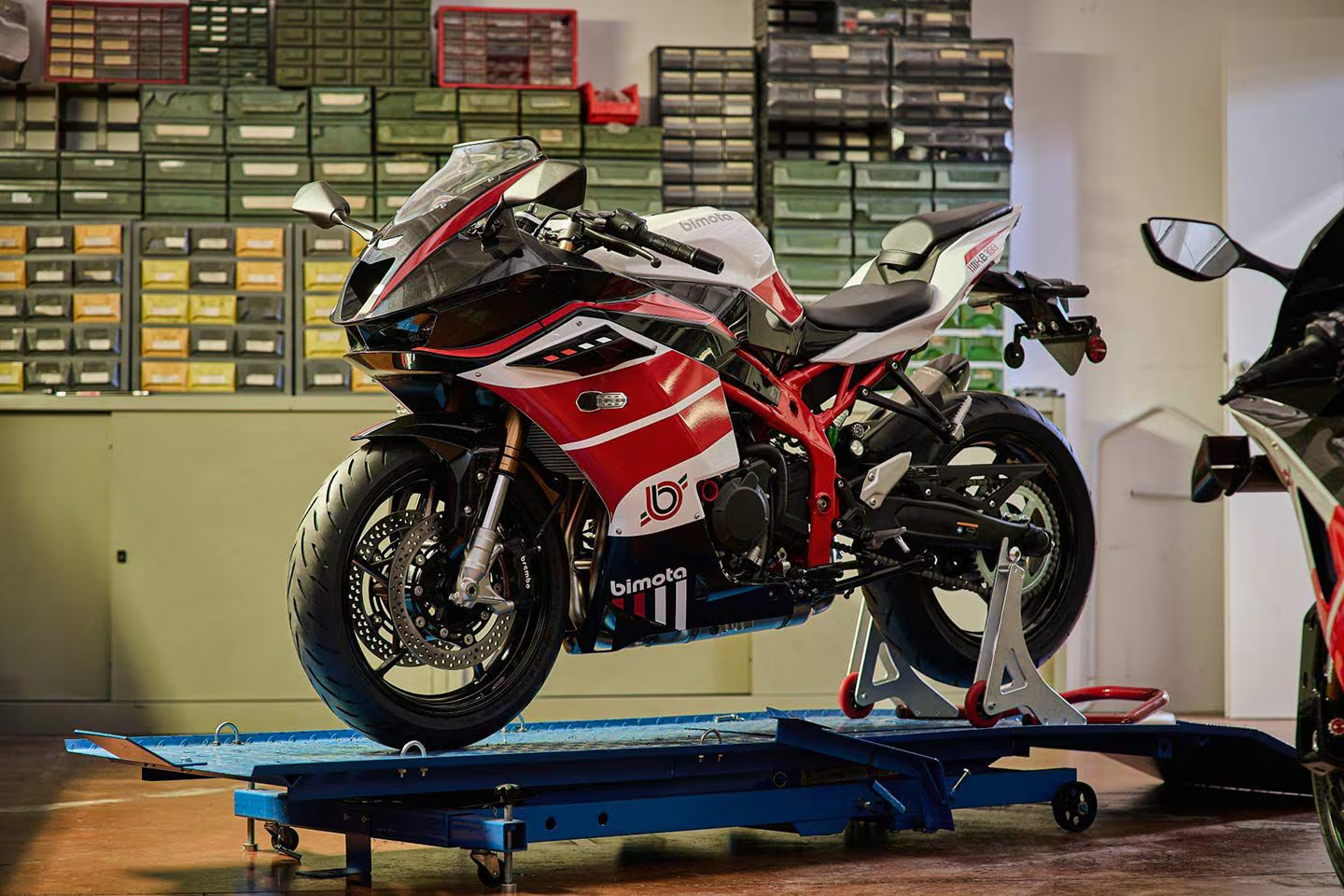
The name Bimota conjures visions of exotic, carbon-clad sportbikes with head-turning looks and jaw-dropping price tags. The new KB399 ushers in a new era of more affordable machines wearing the Bimota badge by drawing heavily on the Kawasaki Ninja ZX-4RR for its mechanical parts.
Note that we said “more affordable,” not simply “affordable.” The KB399 is still a pricy motorcycle in the markets that have revealed an MSRP, costing substantially more than the Ninja with which it shares so much in common.
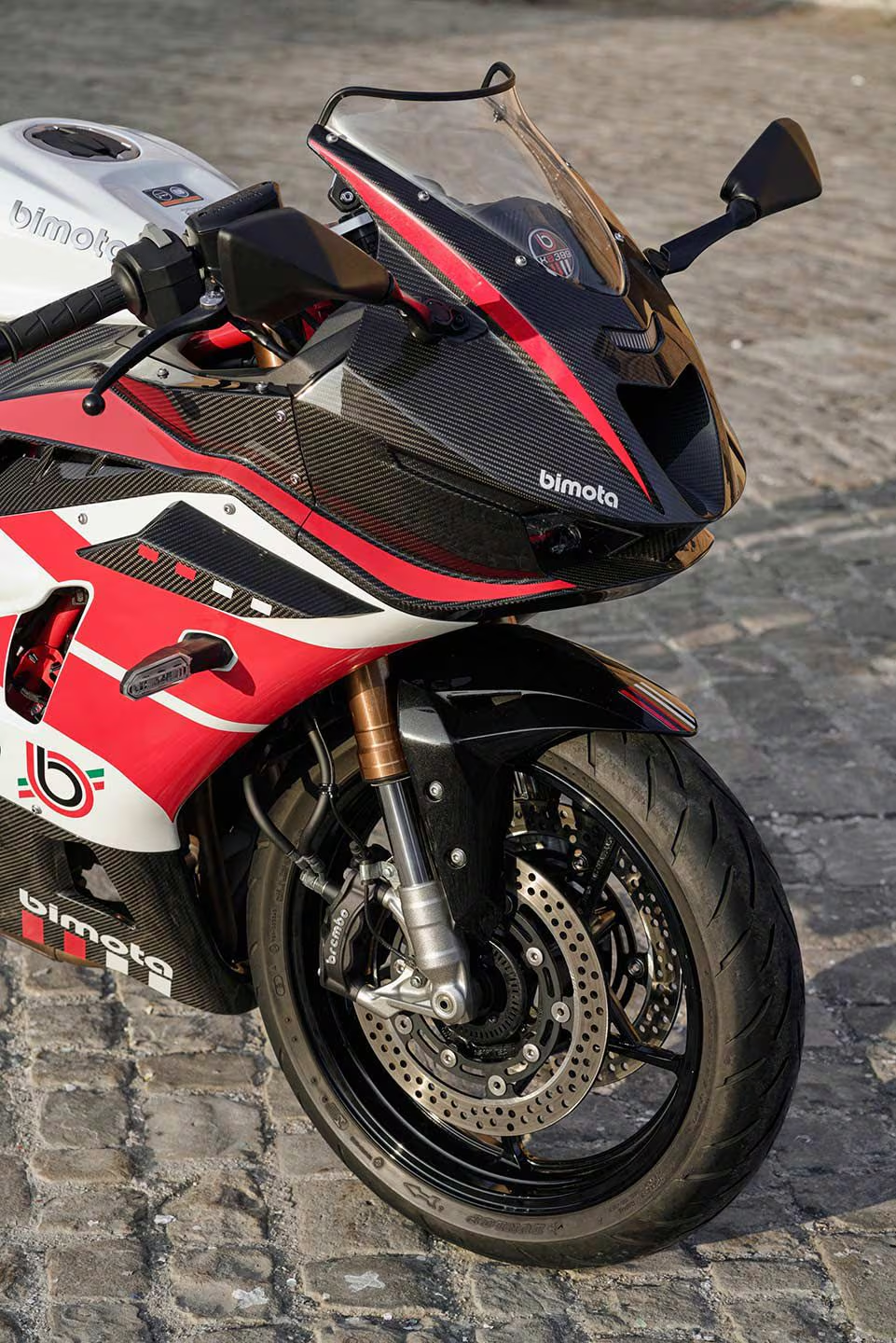
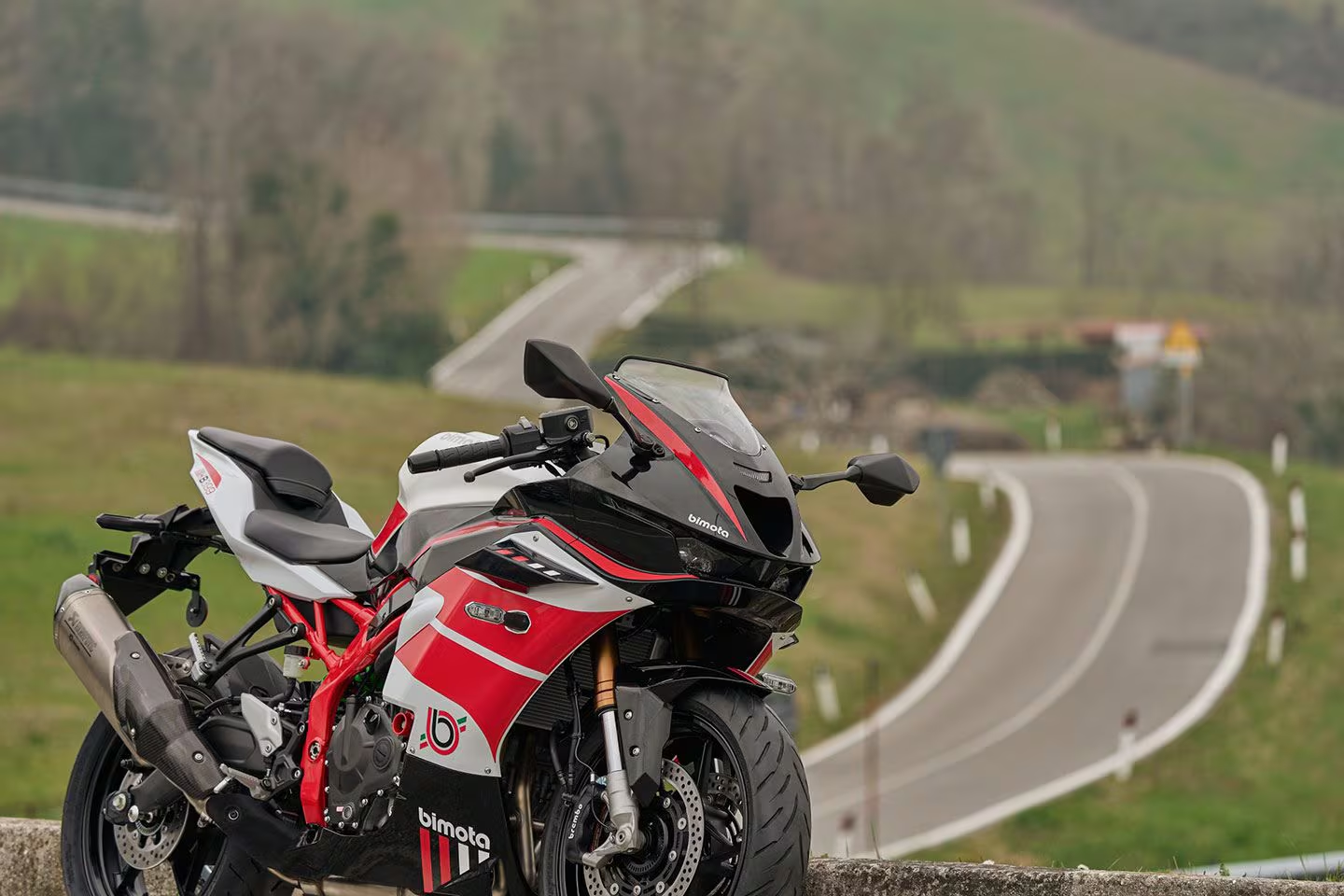
Historically, Bimota’s modus operandi has been straightforward: take a proven engine from a mainstream manufacturer, bolt it into a bespoke chassis, add titanium, billet, and carbon fiber along with up-spec components, and wrap the whole lot in exotic styling. The KB399 breaks that trend, taking both its frame and engine from the Ninja ZX-4RR; it even carries over the Kawasaki’s fuel tank and tail-section. The main styling change is the front fairing, which tones down the Ninja’s robot-looking visage for something a bit more subtle. Expectedly, the KB399 also gets upgraded suspension and brakes. An Akrapovič exhaust adds noise but not power: a peak output of 79 horsepower is identical to the figure Kawasaki claims for the Euro-spec ZX-4RR. Kawasaki’s specs indicate that that figure includes the ram-air effect at speed; it cites a slightly lower output of 76 horsepower when stationary on the dyno. While information from Bimota isn’t explicit, it’s safe to assume it hasn’t altered the ZX-4RR engine; Bimota’s current models use unchanged Kawasaki engines in order to make type-approval simpler and cheaper.
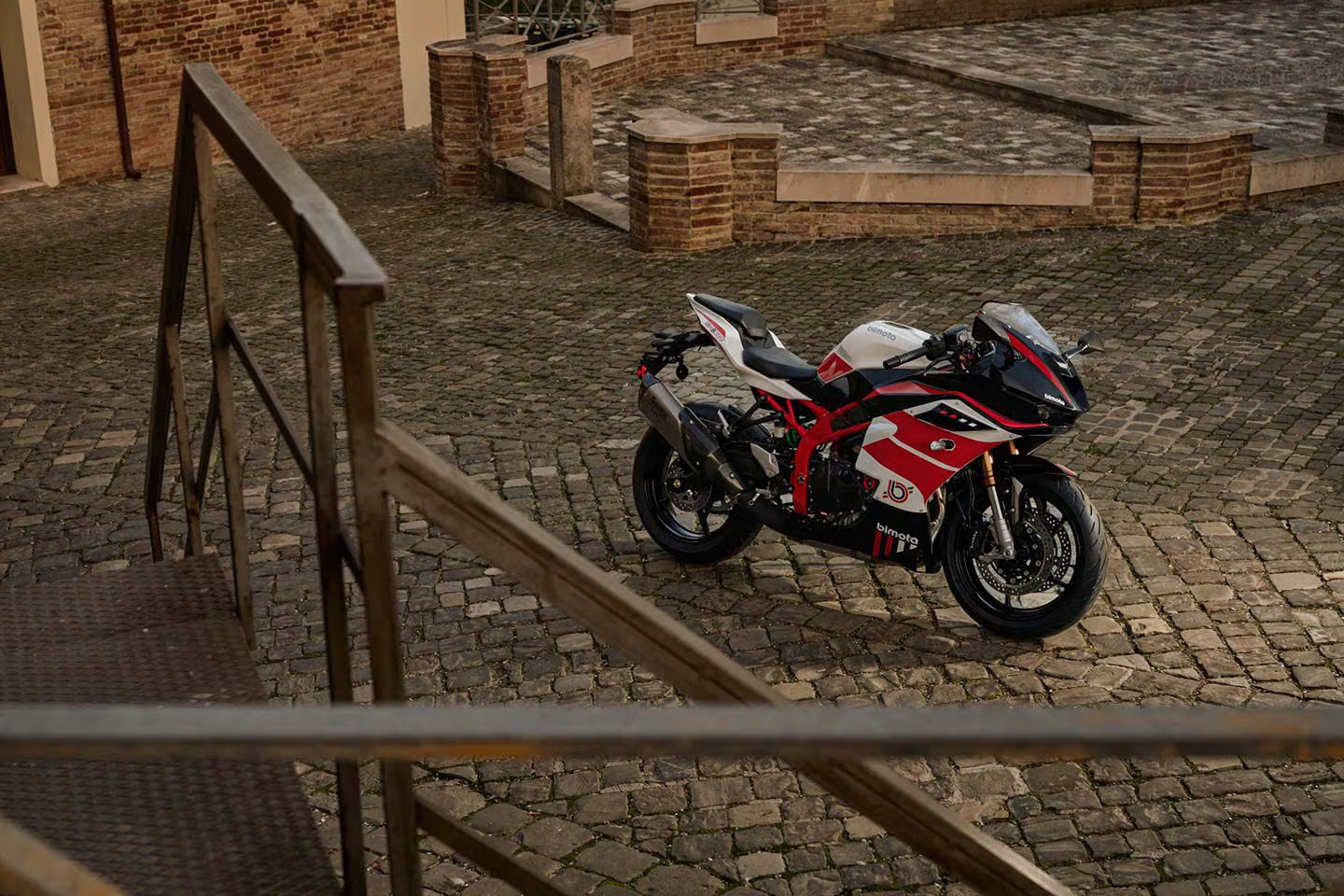
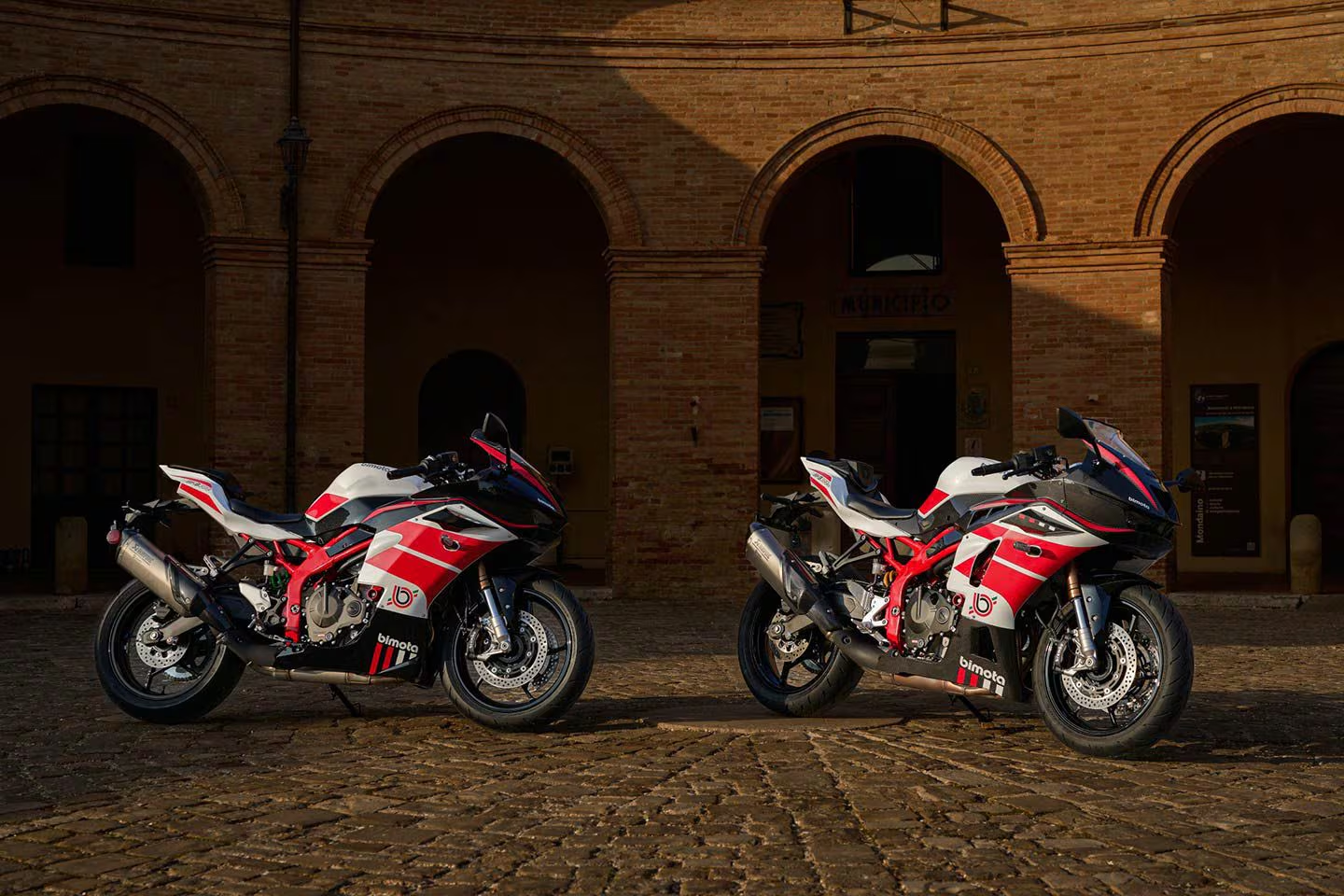
There are two versions of the KB399. The basic model costs £10,099 in the UK market, where prices have been confirmed. That’s equivalent to $13,400 USD, but it’s worth bearing in mind that the ZX-4RR is slightly more expensive there than it is in the US. The standard model uses plastic bodywork and borrows more extensively from the Kawasaki, using parts such as its footpegs and controls. Bimota also offers a more expensive “Edizione Speciale” (ES) model with a much higher price of £14,699 in the UK market (equivalent to $19,500 USD). That extra outlay includes carbon fiber bodywork and a smattering of billet aluminum components, including the pegs, footrest hangers, foot controls, and an Öhlins STX46 rear shock.
Both models use a Showa SFF-BP inverted fork at the front, like those used on the ZX-4RR but with the addition of adjustable compression and rebound damping. The base KB399 also uses the ZX-4RR’s fully adjustable Showa BFRC monoshock at the rear. While the wheels and brake discs are from the Kawasaki, both versions of the Bimota throw out the ZX-4RR’s standard calipers in favor of Brembo Stylema radial four-pots.
Unsurprisingly, the electronics are straight from the ZX-4RR, with the same TFT dash, the same choice of rider modes, power settings, and a trio of traction control presets.
Bimota hasn’t made a serious push in the US market in recent years, so there’s no guarantee that the KB399 will make its way stateside. If it does cross the Atlantic, however, there’s a strong likelihood that it will be the neutered version that the UK market receives. That version has a reduced rev limit and a 20-horsepower reduction in peak power compared to its European brethren.
Even in Europe there’s still quite a wait before the KB399 reaches customers. The company is opening its order books soon, hence the bike’s unveiling, but says that numbers will be limited. The first deliveries aren’t expected until the tail end of 2026, making the KB399 officially a 2027 model.