
2026-07-22
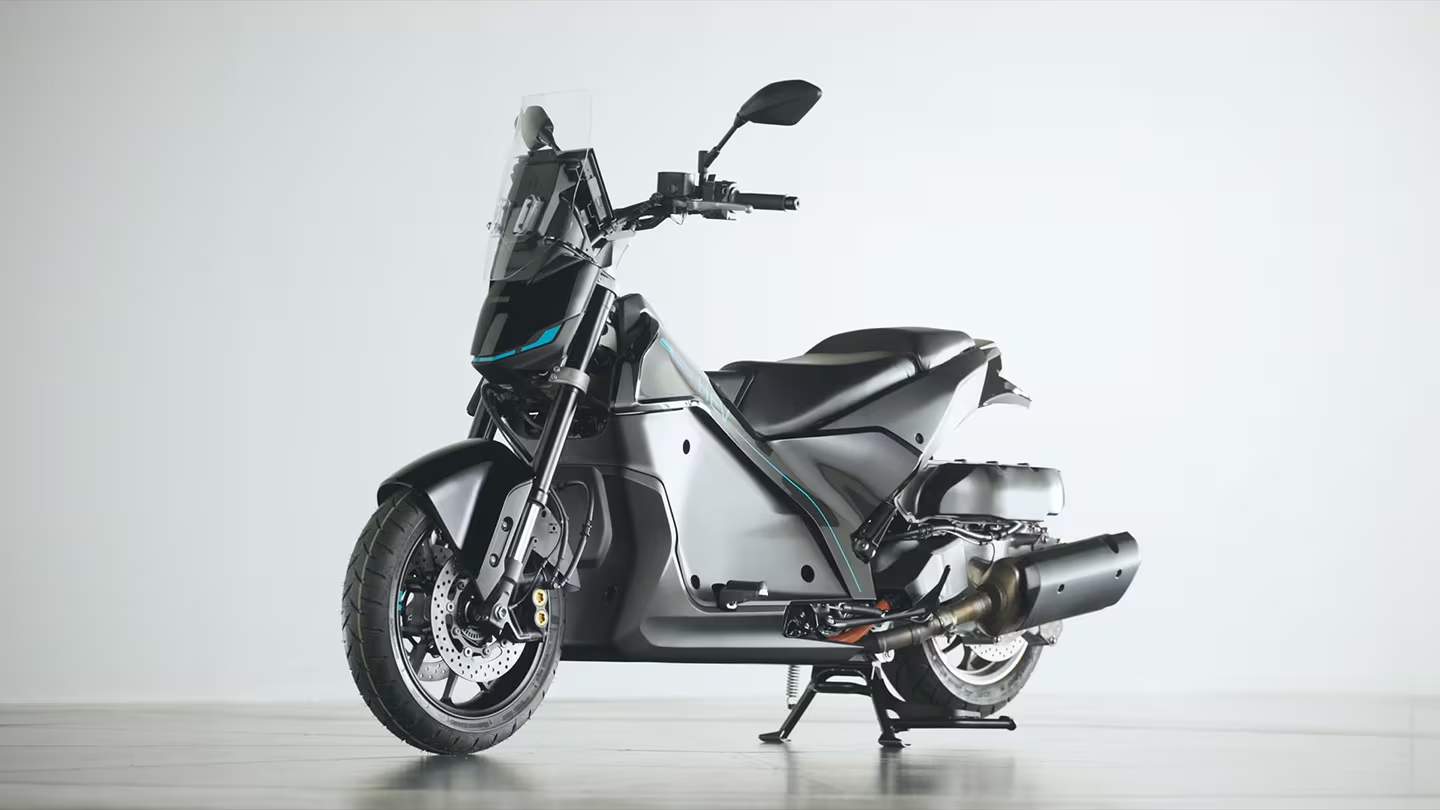
This is the Proto HEV, which Yamaha showed last year. Now, new patents illustrate how its hybrid system works and how it could be fitted into a scooter.Yamaha
It’s surprising that in 2026 Yamaha still doesn’t have a hybrid motorcycle in its range considering that out of all the Japanese OEMs it has one of the longest histories of concepts combining combustion engines and electric powertrains.
Way back in 2005, Yamaha revealed the Gen-Ryu concept bike, an art-deco cruiser-tourer that paired an electric motor with the YZF-R6’s 599cc inline-four via a Toyota Prius-style planetary transmission that balanced the engine and motor’s output. That concept is now of legal drinking age, and while it didn’t result in a production model, the same idea was pursued with a much more showroom-viable concept, the HV-X, developed in 2007 and 2008. The HV-X used the parallel twin from the TMax 500 scooter, again with a planetary transmission to couple the ICE engine’s power with the output of an electric motor. Yamaha and Toyota have collaborated on projects for decades, and with the Toyota Prius riding high in global sales at the time, it made sense to transfer its hybrid thinking to bikes.
The HV-X, despite being demonstrated in action, vanished without a trace when the global economic crisis of 2008 saw manufacturers slashing R&D budgets and pulling back from risky, novel projects such as hybrid power.
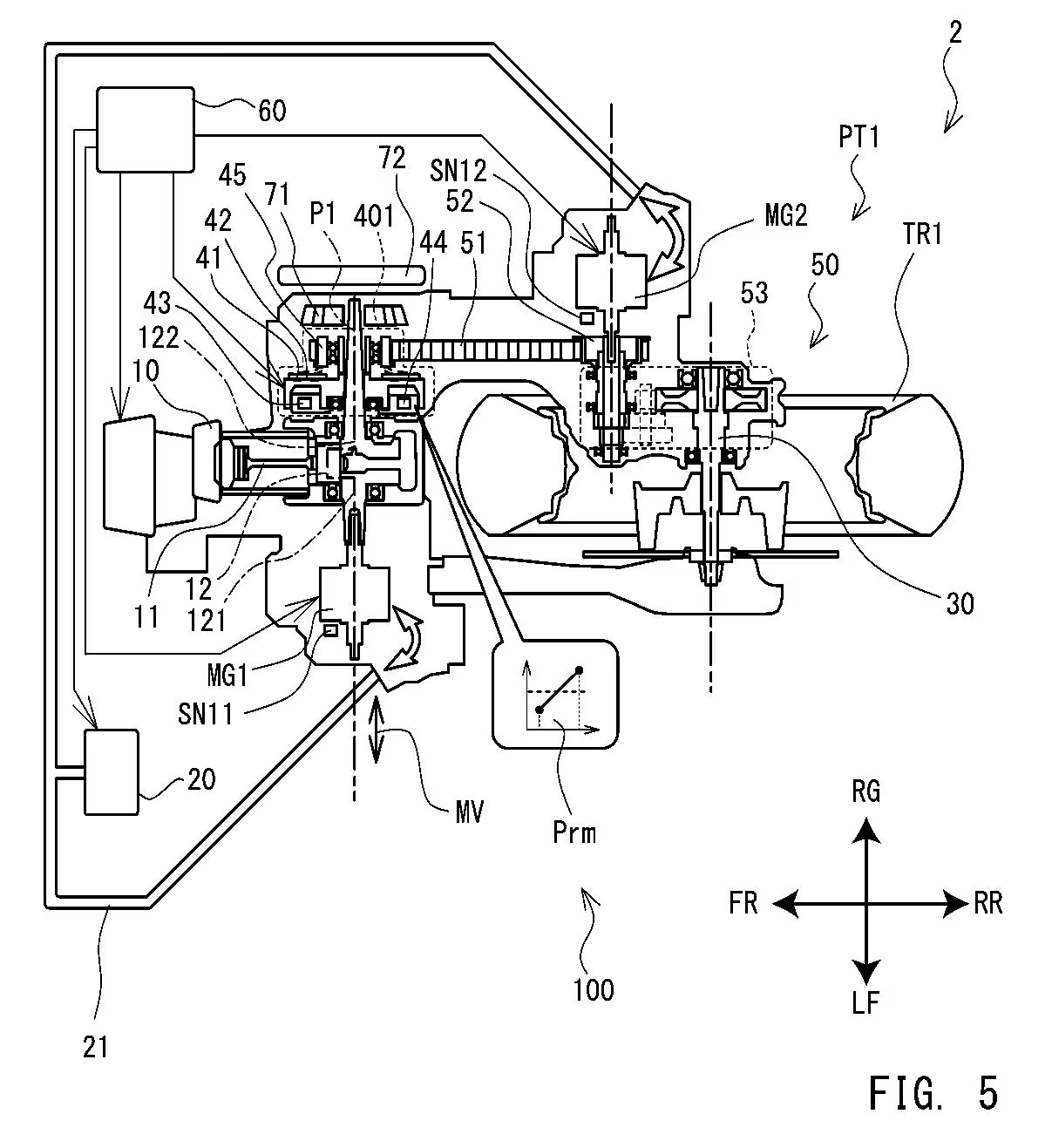
The patent illustrates how the electric motors and internal combustion engine work together with a CVT gearbox.Yamaha
Now, Yamaha’s move toward hybrid power has been revived. Last year, the company showed two prototype hybrid bikes, the Proto PHEV and the Proto HEV. New patent applications show the inner workings of the Proto HEV’s powertrain and how it can be incorporated into a conventional-looking maxi-scooter.
While the Proto PHEV is an MT-09-based three-cylinder naked bike that using plug-in hybrid power to boost its performance and cut emissions, the Proto HEV is a single-cylinder with not one but two electric motors and a twist-and-go, belt-driven CVT (Continuously Variable Transmission) gearbox. Described in the patents as a series-parallel hybrid, it’s immensely flexible, able to be powered purely by electric power, by its combustion engine alone, or by a combination of the two.
The key is the use of two electric motor-generator units instead of just one. The first is located at the back of the scooter-style swingarm/transmission unit and acts directly on the rear wheel. This motor, powered by a substantial battery pack between the rider’s legs, can drive the bike in pure electric mode, wherein the ICE powertrain is switched off and disconnected from the CVT via an electromagnetic clutch. The motor also regenerates power and feeds it back to the battery during deceleration.
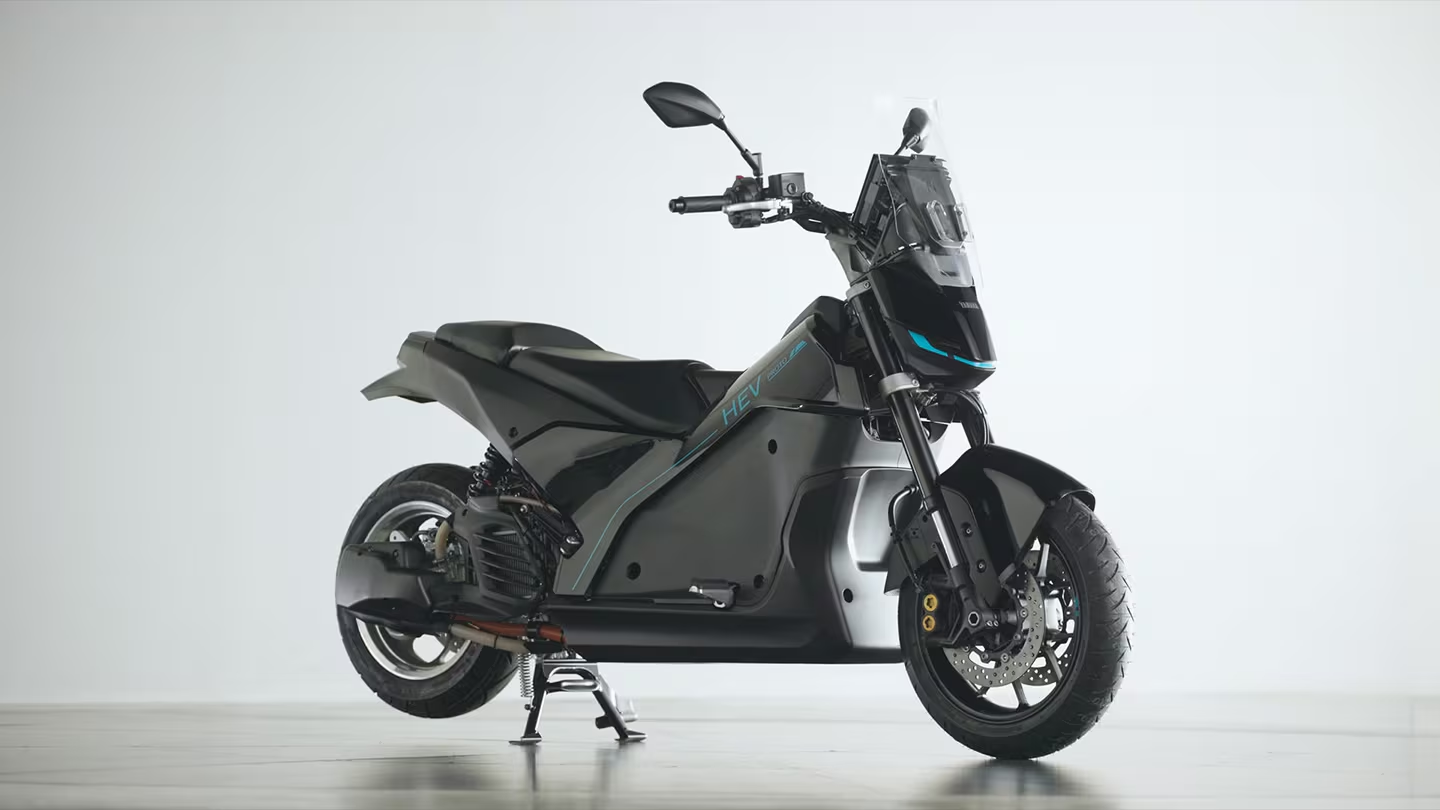
The Proto HEV is shaped halfway between a motorcycle and a scooter. Yamaha’s patents suggest its hybrid tech could also work in a conventionally shaped maxi-scooter.Yamaha
The second motor is attached to the engine’s crankshaft and works as both a motor and a generator. That means the combustion engine can kick in automatically when the battery is drained beyond a preset point. With the electromagnetic clutch disengaged from the CVT, it can operate at constant, efficient revs to drive the generator and recharge the battery, acting as a range extender while the bike still operates in electric mode.
If the rider calls for more performance than the rear electric motor alone can provide, the clutch is automatically engaged, connecting the combustion engine to the conventional CVT gearbox to drive the rear wheel like any normal twist-and-go scooter. Simultaneously, the front motor/generator continues to recharge the battery. The rear motor can also drive the wheel to assist the combustion engine in a parallel hybrid mode.
Finally, there’s a performance focused boost mode where both the front and the rear electric motors assist the combustion engine to maximize torque and power at the rear wheel.
The patents focus on two subjects. The first covers the way in which the system seamlessly switches between modes without the rider needing to intervene. The automatic mode-switching requires the drivetrain computer to juggle both motors’ drive and regeneration modes, as well as the combustion engine’s throttle position, and the engagement and disengagement of the clutch. That procedure needs to be as seamless as possible, so power—regardless of if it’s derived from the motors or from the engine (or from both)—is delivered as expected.
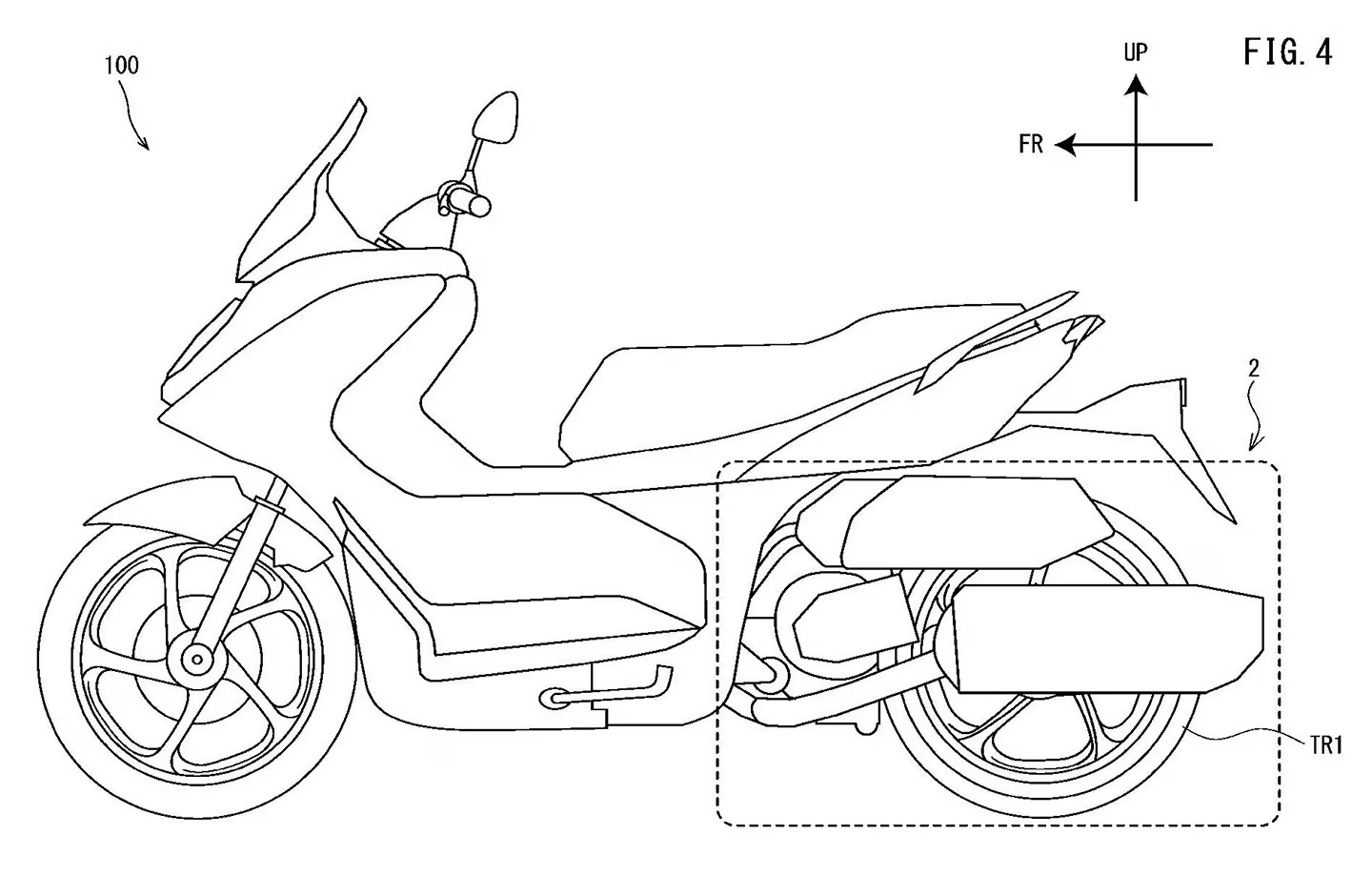
The patents illustrate how the Proto HEV’s hybrid system could be fitted into a scooter.Yamaha
The second focus of the patent illustrates the powertrain’s fitment in a conventional-looking scooter rather than the more motorcycle-shaped Proto HEV displayed last year. While only a simplistic outline, it shows how the components can be packaged into a scooter’s more practical shape with foot boards and the usual cowl-like bodywork ahead of the rider’s legs.
Will Yamaha’s renewed interest in hybrids be more fruitful than its efforts two decades ago? With a growing number of cities around the world implementing zero-emissions zones there will be demand for vehicles like the Proto HEV that can operate in an all-electric mode while retaining the range and refueling capability of a combustion engine.


